Highlights
- Academia is often vilified in Ghana due to its failure to meet expectations and the exploitation of trained individuals.
- The Soil Research Institute of the Council for Scientific and Industrial Research (CSIR) conducts significant on-farm, on-station, and off-farm industrial research.
- Field trials are conducted to test the adoption of workable solutions by farmers and private businesses.
- The research involves a range of activities including drawing the scheme, writing out the protocol, site selection, land preparation, monitoring, and agronomic measures.
- Field trials in Techiman, Manga, and Kwadaso depict farmers' experiences, such as the lack of irrigation in some areas.
- A study in Uganda found that mulching significantly improved soil hydro-physical properties, with the highest improvement at a 10 cm mulch thickness.
- These efforts have led to the development of fertilizers and blends that farmers are now using.
- Most agronomic practices at farms and industries are based on recommendations from research institutes and academia.
- These rigorous works, involving planning, monitoring, record-keeping, and adhering to standards, have led to the employment of scientists trained in such sectors.
There is an observation I have made over the past years, and I think it is worth talking about. The observation concerns Ghana and academia. I argue that the most vilified victim is academia in Ghana. Usually, academia is the easiest to blame and easily preyed upon when people fail to live up to expectations at the various institutions and places of work. And when the trained equally do things the untrained would do! Well, those who criticize our academia may be justified because their complaints and criticisms may be valid, and they motivate the academia to do more! Our contributions to national development are not recognized, and we are rather bashed!
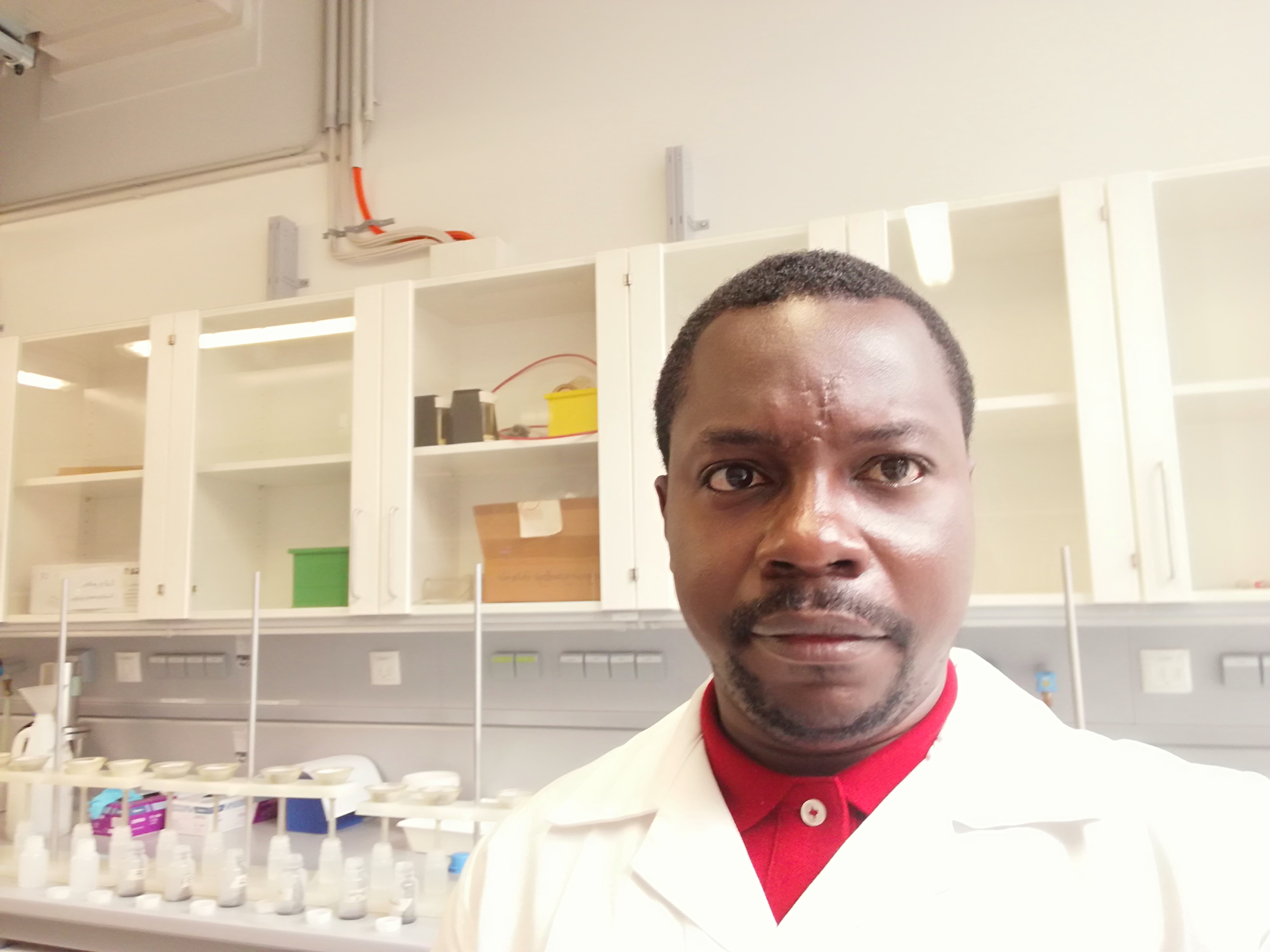
As a scientist at the government's research institute, the Soil Research Institute of the Council for Scientific and Industrial Research (CSIR, we have been doing quite substantial mainstream on-farm, on-station, and off-farm industrial research! These things are done by not sitting in the offices but by setting up field demonstrations to test and evidently prove the adoption of workable solutions by the farmers and other private businesses! Personally, I have been involved in field trials testing the efficacy and solubility of new fertilizers introduced and supplied by the government to farmers! These experiments are done by first drawing the scheme on paper, writing out the protocol and the methods, site selection, land preparation involving field clearing, sowing, monitoring, and taking agronomic measures, harvesting, data collection, laboratory investigation and analysis, writing out the findings, discussing, and final dissemination of the findings for policy action by those in charge through publication! I have personally been involved in field trials in Techiman, Manga, and Kwadaso! In such scenarios, we do field experiments to depict what the farmers experience! For instance, there was an experiment in Techiman in which we did not apply irrigation because the farmers did not!
If I am to add, in Uganda we conducted a study, and I co-authored a research paper on the effects of mulching on soil hydro-physical properties in South Central Uganda, published in the Journal of Applied Ecology and Environmental Science. The study aimed at assessing the effect of mulching on soil hydro-physical properties in Kibaale sub-catchment in South Central Uganda. Samples were obtained between 0–20 cm depths and under 0, 5, 10, and 15 cm mulch thickness levels. The experiment involved 3 farmers and 4 treatments of corn residue mulch thicknesses, each replicated three times on each of the farmer sites. The study found that the application of mulch significantly improved all the soil hydro-physical properties that were studied, and the level of improvement was highest with a 10 cm mulch thickness. The study recommended the use of a 10-cm mulch thickness by farmers in the Kibaale district in south-central Uganda. And many other life-changing scientific projects, which time may not allow today!
Such efforts from our research institutions and academia have developed fertilizers and blends that farmers are now adopting and using! Additionally, most of the agronomic practices at farms and industries are those made through recommendations from our research institutes and academia! Such works are rigorous, involving planning, monitoring, record-keeping, sticking to standards, and writing, and as such, scientists trained in such regards are employed in such sectors! And we reduce such block contributions to the economy, thinking they are doing little, that they have no skills, and that they do not matter? Thinking because they do not usually go loud or perhaps because they don’t manufacture helicopters?